Membrane Fouling in Industrial Water Treatment: Causes, Impacts, and Prevention
Membrane filtration has become an essential part of modern industrial water and wastewater treatment. Reverse Osmosis (RO), Nanofiltration (NF), Ultrafiltration (UF), and Microfiltration (MF) systems are widely used to produce high-quality water, recover valuable resources, and enable water reuse across demanding industrial applications.
Yet even a well-designed membrane system can experience a gradual decline in performance.
Permeate flow decreases. Operating pressure increases. Energy consumption rises. Cleaning becomes more frequent. Eventually, membrane replacement may be required sooner than expected.
One of the main causes behind this decline is membrane fouling.
Fouling is not simply a matter of having a "dirty membrane." It is a complex operational challenge influenced by feed water characteristics, pretreatment efficiency, membrane selection, system design, and operating conditions. If not properly managed, fouling can affect not only membrane performance but also the overall reliability and operating cost of a water treatment plant.
For industrial facilities, the real question is therefore not simply:
"How do we clean a fouled membrane?"
The more important question is:
"How do we prevent fouling from becoming a recurring operational problem in the first place?"
Understanding the mechanisms behind membrane fouling—and addressing its root causes—is essential for maintaining stable performance, extending membrane life, reducing downtime, and controlling the long-term cost of membrane-based water treatment systems.
In this article, we examine the main types and causes of membrane fouling, how fouling affects system performance, the critical role of pretreatment, and practical strategies for preventing and controlling fouling in industrial membrane systems.
What Is Membrane Fouling?
Membrane fouling is the unwanted accumulation or deposition of substances on the surface of a membrane or within its structure, resulting in a gradual reduction in filtration performance.
Depending on the membrane technology and feed water characteristics, fouling can be caused by suspended particles, colloidal matter, organic compounds, microorganisms, or inorganic substances.
As these contaminants accumulate, they can form a layer or deposit that interferes with the normal passage of water through the membrane.
In practical terms, this can lead to:
- - Reduced permeate flux
- - Increased transmembrane pressure or operating pressure
- - Higher energy consumption
- - Increased frequency of chemical cleaning
- - Declining water production
- - Potential deterioration in permeate quality
- - Shorter membrane service life
- - Higher operating and maintenance costs
The severity and nature of fouling depend heavily on the characteristics of the feed water and how effectively the treatment system is designed to manage those characteristics.
This is why membrane fouling should not be viewed as an isolated membrane problem. In many cases, it is the result of a combination of factors across the entire treatment process—from feed water quality and pretreatment to membrane selection and operating conditions.
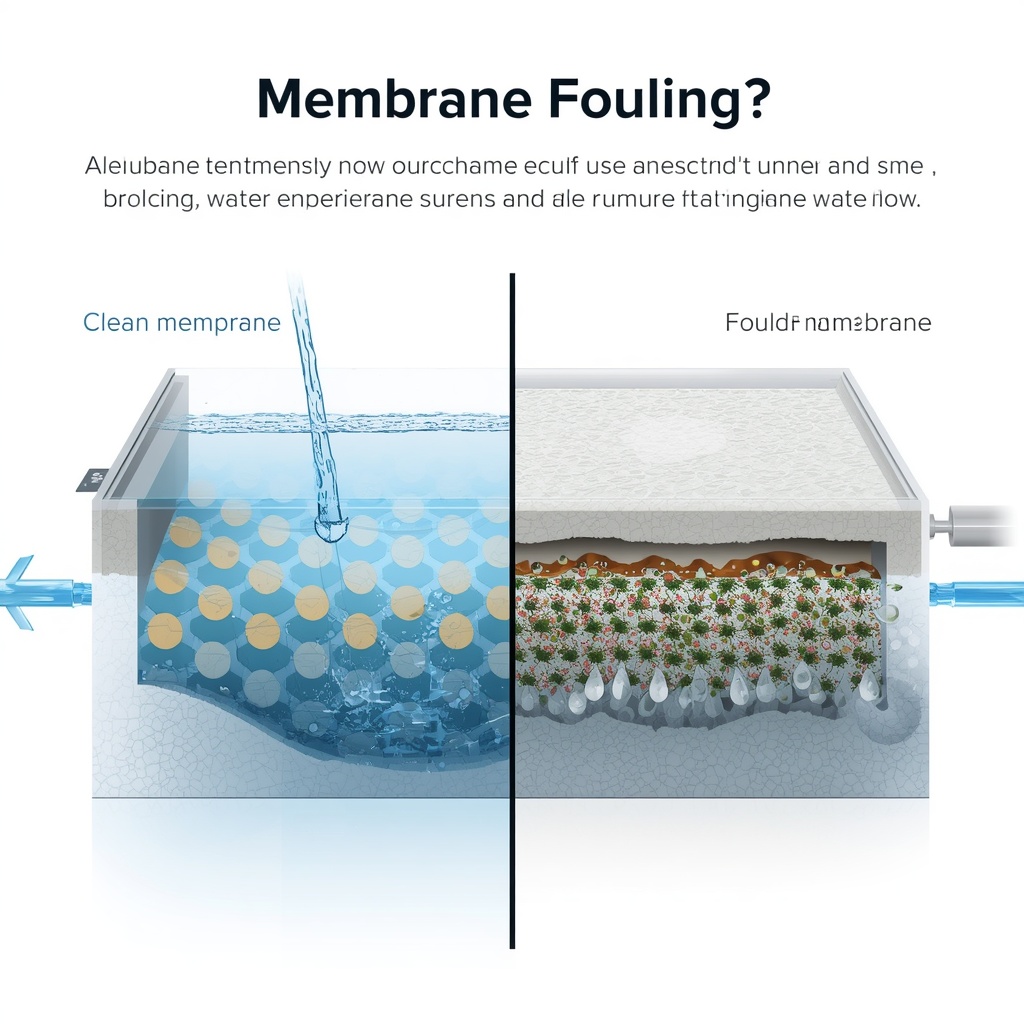
Clean Membrane vs. Fouled Membrane
Clean Membrane
Water flows efficiently through the membrane with minimal resistance.
Fouled Membrane
Accumulated contaminants create resistance to water flow, reducing permeate flux and membrane performance.
The Main Types of Membrane Fouling
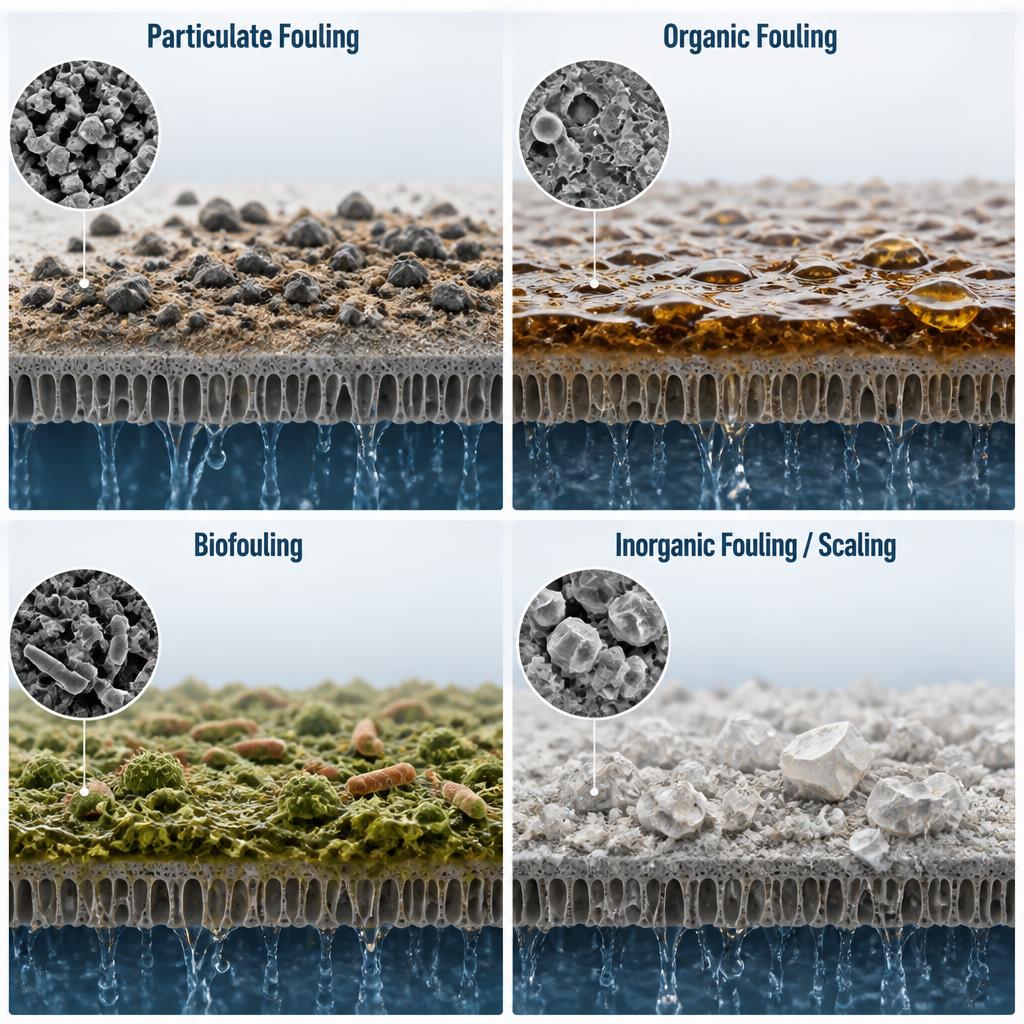
Particulate Fouling
The accumulation of suspended solids, silt, clay, and colloidal particles on the membrane surface, restricting water flow and reducing filtration performance.
Organic Fouling
The deposition of organic compounds, natural organic matter, oils, and other carbon-based substances on the membrane surface.
Biofouling
The growth and accumulation of microorganisms and biofilm on the membrane surface, which can significantly reduce membrane performance and increase cleaning requirements.
Inorganic Fouling / Scaling
The precipitation and deposition of dissolved minerals and salts, such as calcium carbonate, calcium sulfate, silica, and other inorganic compounds, forming scale on the membrane surface.
How Does Membrane Fouling Develop?
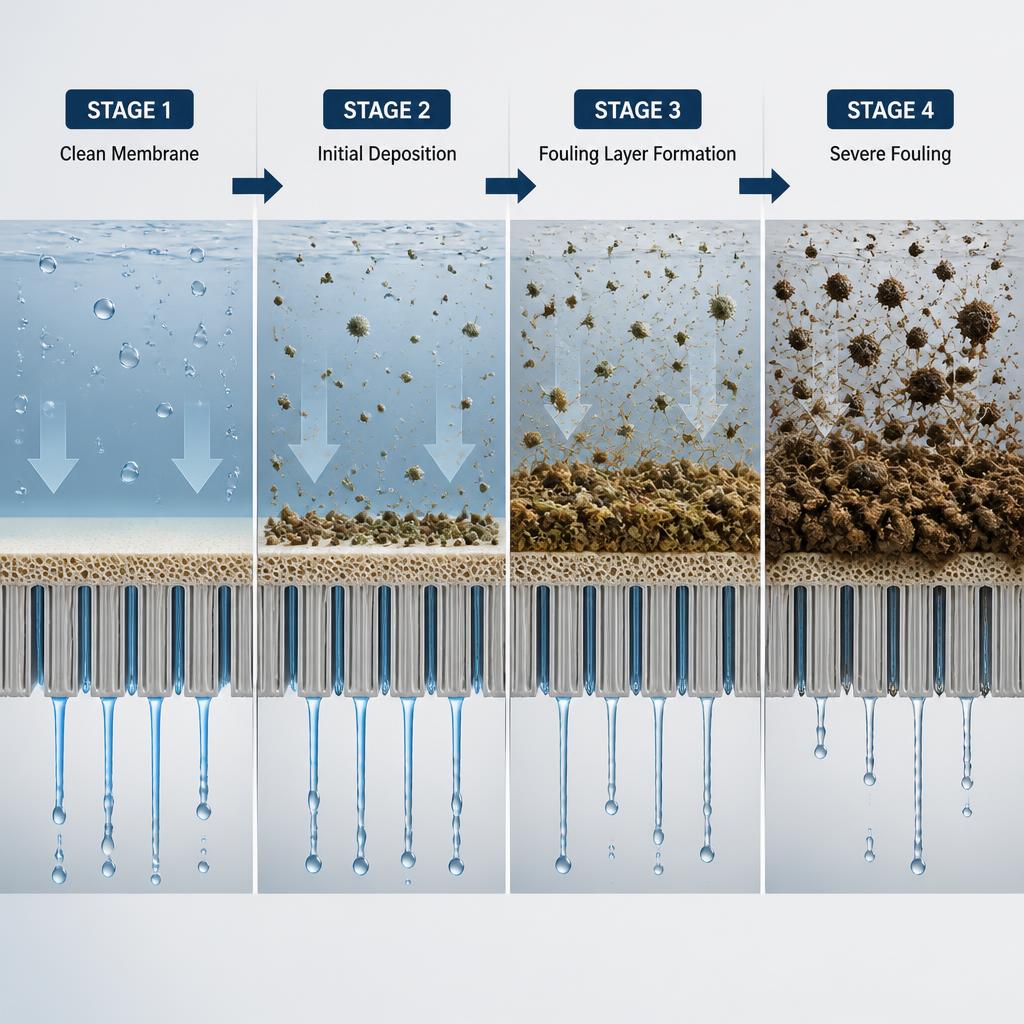
Stage 1 — Clean Membrane
Water flows freely through the membrane with minimal resistance and stable filtration performance.
Stage 2 — Initial Deposition
Suspended particles, organic compounds, microorganisms, or other contaminants begin to accumulate on the membrane surface.
Stage 3 — Fouling Layer Formation
As contaminants continue to accumulate, they form a progressively thicker layer that increases resistance to water flow.
Stage 4 — Severe Fouling
Significant accumulation restricts water passage, resulting in reduced permeate flux, increased operating pressure, higher energy consumption, and declining system performance.
How Does Membrane Fouling Affect System Performance?
Reduced Permeate Flux
As fouling builds up on the membrane surface, resistance to water transport increases, resulting in lower permeate production.
Increased Operating Pressure
More pressure may be required to maintain the desired water production rate as the membrane becomes increasingly fouled.
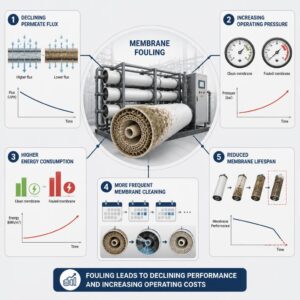
Higher Energy Consumption
Increased operating pressure can lead to greater energy demand and higher operating costs.
More Frequent Cleaning
Fouled membranes require more frequent chemical cleaning, increasing chemical consumption, maintenance requirements, and downtime.
Shorter Membrane Life
Repeated fouling and aggressive cleaning cycles can accelerate membrane deterioration and reduce its effective service life.
Clean Membrane vs. Fouled Membrane
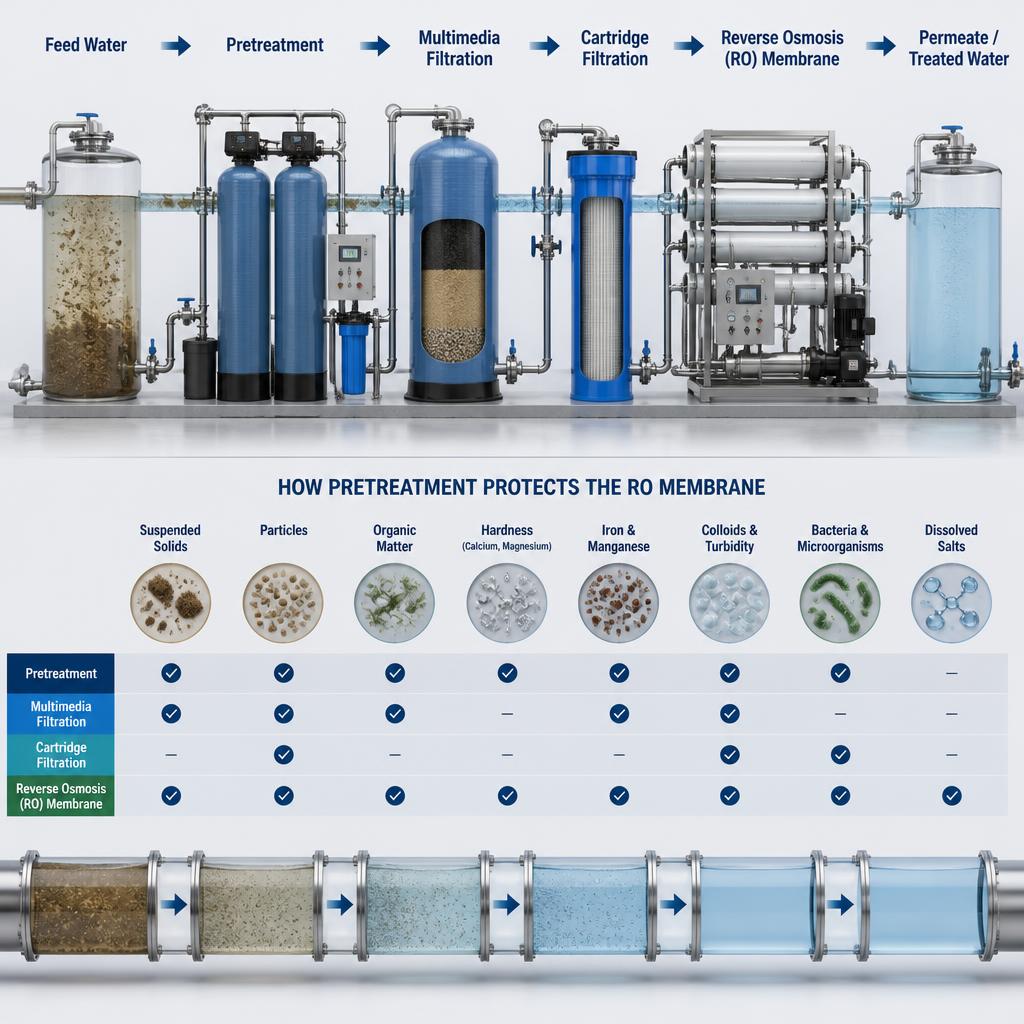
Feed Water
Raw or industrial process water may contain suspended solids, colloids, organic matter, microorganisms, and other contaminants that can contribute to membrane fouling.
Pretreatment
Appropriate pretreatment processes reduce the fouling potential of the feed water before it reaches the membrane system.
Multimedia Filtration
Removes suspended solids and larger particulate matter to reduce the load on downstream filtration stages.
Cartridge Filtration
Provides finer particle removal and helps protect the RO membrane from remaining suspended particles.
Reverse Osmosis (RO) Membrane
With properly treated feed water, the RO membrane can operate more efficiently, maintain stable performance, and achieve a longer service life.