RO vs UF Membranes: Key Differences and Industrial Applications
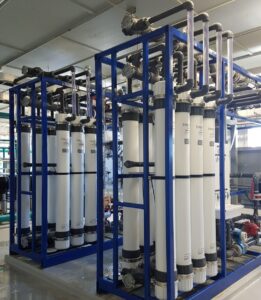
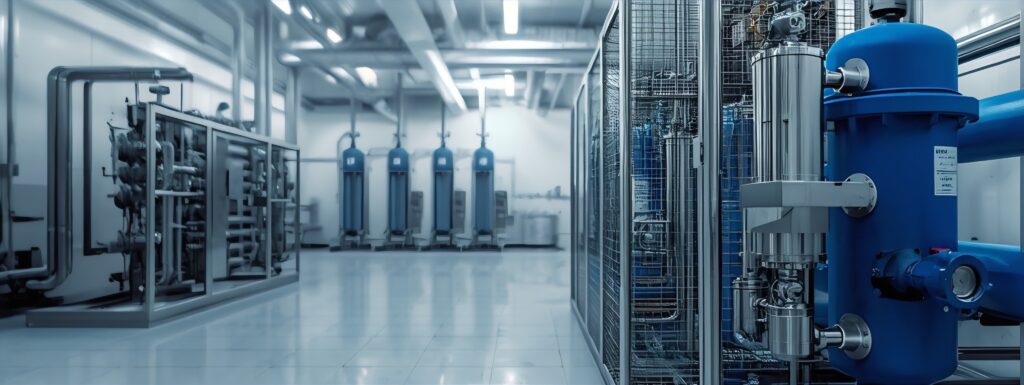
Membrane filtration technologies have become an essential part of modern industrial water treatment systems, helping industries achieve higher water quality, improve process efficiency, and reduce operational challenges. Among the most widely used membrane technologies, Reverse Osmosis (RO) and Ultrafiltration (UF) play a critical role in applications ranging from petrochemical plants and power generation facilities to mining, food processing, and pharmaceutical industries.
Although both technologies use semi-permeable membranes to separate contaminants from water, RO and UF membranes operate based on different principles and are designed for different treatment objectives. Ultrafiltration is mainly used to remove suspended solids, bacteria, and larger organic compounds, while Reverse Osmosis provides a much finer separation process capable of removing dissolved salts, ions, and other microscopic contaminants.
Understanding the differences between RO vs UF membranes is essential for selecting the right membrane solution for each industrial application. Choosing the appropriate technology depends on factors such as feed water quality, required water purity, operating conditions, and overall system design.
In this article, we will explore the key differences between Reverse Osmosis and Ultrafiltration membranes, compare their performance, applications, advantages, and limitations, and explain how industries can select the most suitable membrane technology for their specific needs.
What Is Ultrafiltration (UF) Membrane Technology?
Ultrafiltration (UF) is a membrane filtration technology that uses a semi-permeable membrane to separate suspended solids, microorganisms, colloidal particles, and high molecular weight organic compounds from water. UF membranes operate through a physical separation process where water passes through microscopic pores while larger contaminants are retained.
UF membranes typically have pore sizes in the range of approximately 0.01 to 0.1 microns, making them highly effective for removing bacteria, fine particles, turbidity, and other impurities that can affect downstream treatment processes.
UF technology is widely applied in industries such as petrochemical, mining, power generation, food and beverage, and pharmaceutical manufacturing. Its advantages include high filtration efficiency, compact system design, low chemical consumption, and reliable operation under various water quality conditions.
RO vs UF Membranes: Key Differences in Filtration Performance
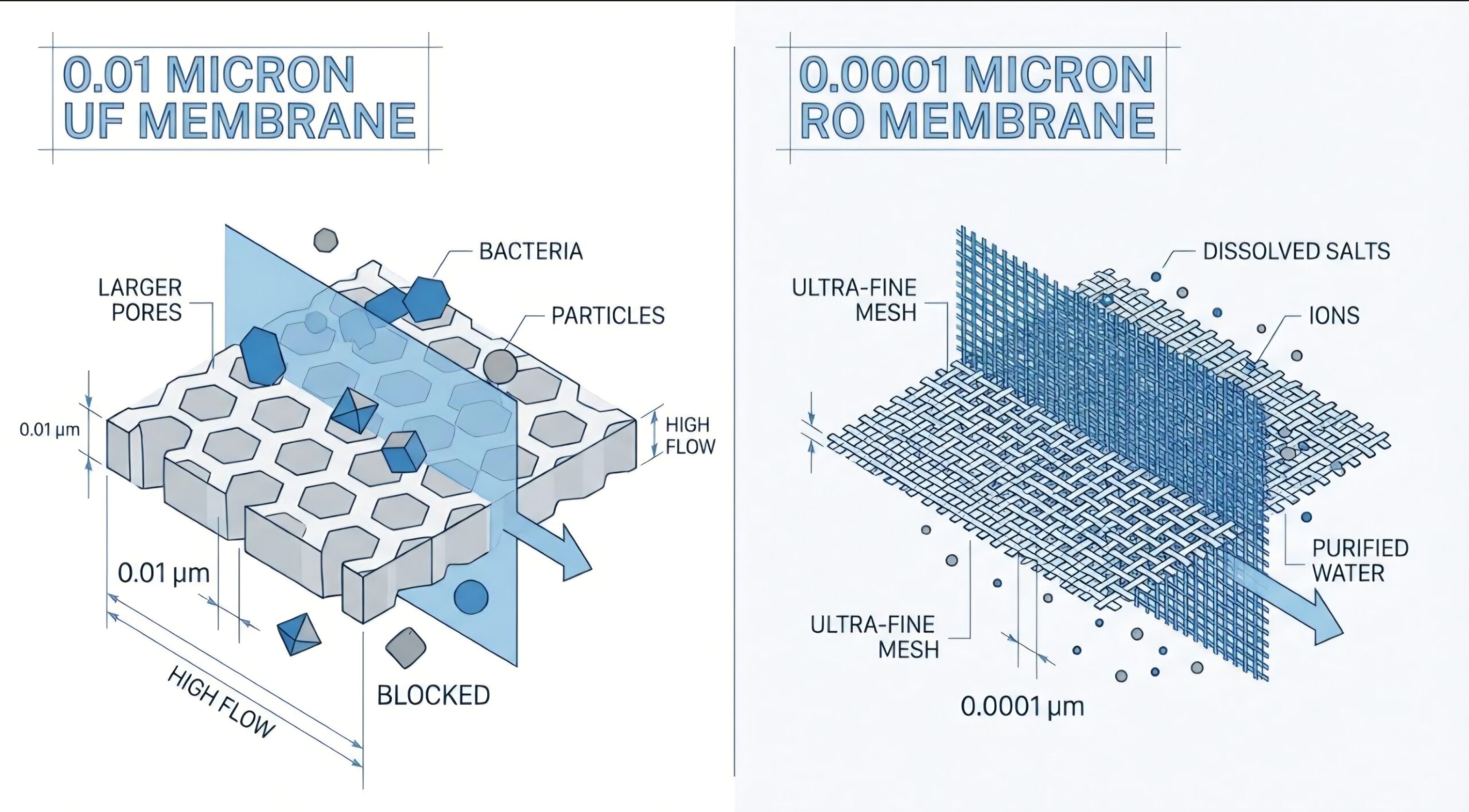
Although both Reverse Osmosis (RO) and Ultrafiltration (UF) are membrane-based filtration technologies, their separation capabilities are significantly different due to their membrane structure and pore size.
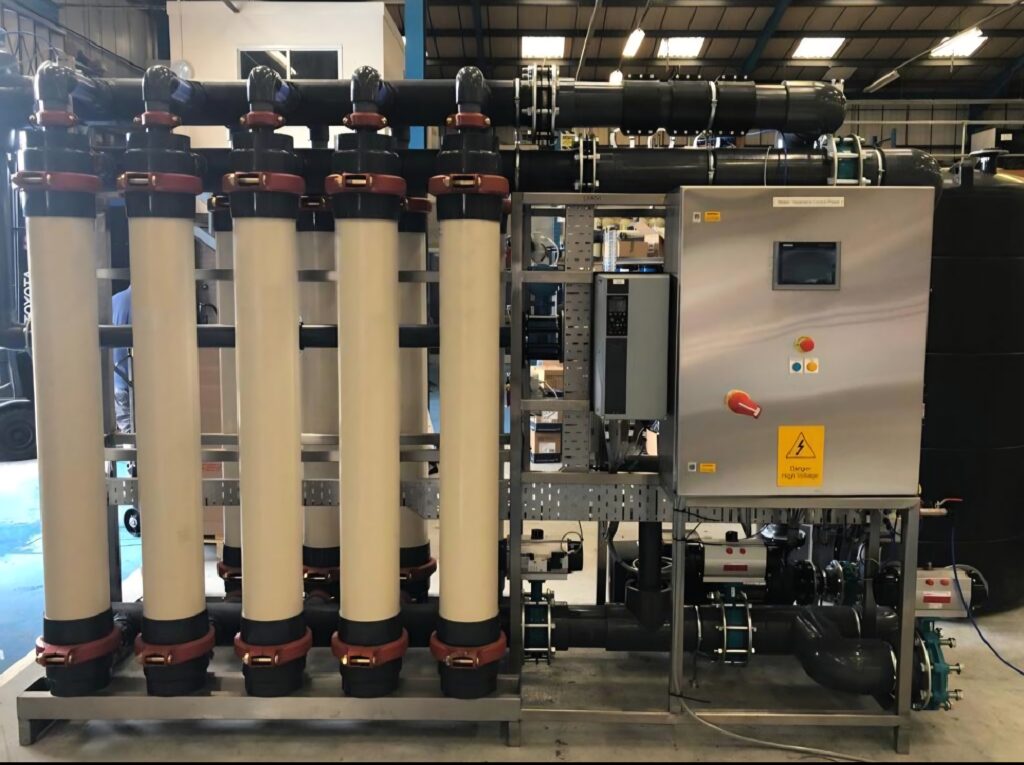
Ultrafiltration (UF) membranes are designed to remove larger contaminants such as suspended solids, bacteria, viruses, and colloidal particles. With pore sizes typically around 0.01 to 0.1 microns, UF provides excellent physical filtration and is commonly used as a pretreatment step to protect downstream processes.
Reverse Osmosis (RO) membranes operate at a much finer filtration level. Unlike UF, RO does not rely only on physical pore separation; it uses a dense membrane layer and pressure-driven process to remove dissolved salts, ions, heavy metals, and other microscopic contaminants. RO membranes can achieve high removal rates for total dissolved solids (TDS), making them suitable for desalination and high-purity water production.
Selecting between UF and RO depends on the required water quality, feed water characteristics, and the final application. In many industrial systems, these two technologies work together, with UF providing effective pretreatment and RO delivering advanced purification.
How Reverse Osmosis (RO) Membranes Work?
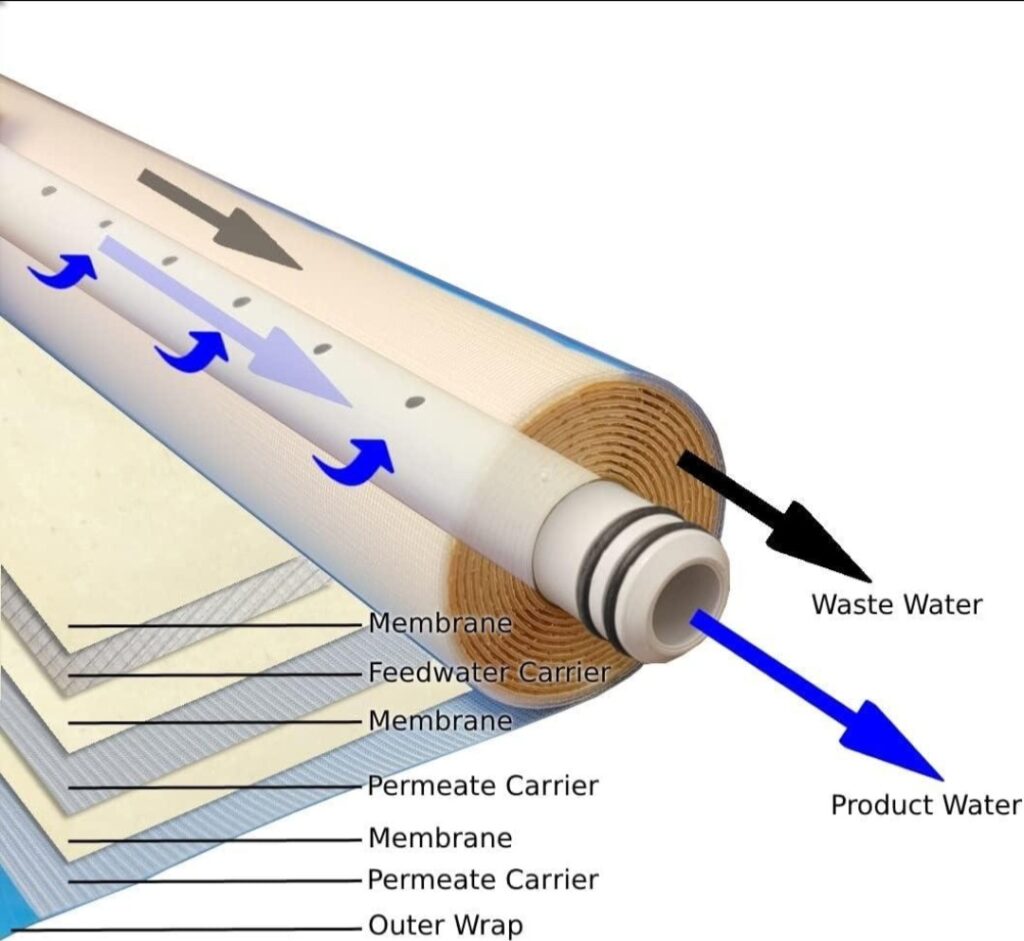
Reverse Osmosis (RO) is one of the most advanced membrane separation technologies used in industrial water treatment. Unlike conventional filtration methods, RO uses hydraulic pressure to force water molecules through a dense semi-permeable membrane while rejecting dissolved salts, minerals, heavy metals, organic compounds, and other microscopic contaminants.
Most industrial RO systems utilize spiral wound membrane elements, which provide a large filtration surface area within a compact module. Feed water flows across the membrane surface under high pressure, allowing purified water (permeate) to pass through the membrane while the concentrated contaminants are discharged as reject or concentrate.
The performance of an RO system depends on several factors, including feed water quality, operating pressure, temperature, recovery rate, and proper pretreatment. Without adequate pretreatment, suspended solids and organic matter can cause membrane fouling, reducing system efficiency and increasing maintenance costs.
Which Membrane Technology Is Right for Your Industry?